Orange - Spain

When I joined Orange Spain as a UX/UI Designer, I stepped into a fast-paced digital environment where dozens of products, tariffs, and services coexist—each with its own rules, technical dependencies and customer limitations. My role inside the “Tribu Digital” was to bring structure, clarity and consistency to experiences that millions of users interact with every day. It wasn’t just about designing screens — it was about improving a system that needed to evolve continuously.

Role:

UX/UI Designer

Tools:

Figma · Adobe Tools ·  Visual Studio

Date:

2020

Discover
Navigating a complex product universe

🧩 Understanding the environment

Orange frequently launches new tariffs, bundles, fiber packages, and partner promotions (Netflix, Amazon). These continuous updates made the digital experience fragmented across channels: website, logged-in area, and Mi Orange App. My first challenge was understanding this complex ecosystem and documenting the rules behind each user flow.

📚 Research activities

✔ Benchmarking of international telcos
✔ Stakeholder interviews (product, marketing, business, dev, legal)
✔ User Journeys & Personas
✔ Analytics review & heatmap analysis
✔ Audit of all existing shopping carts
✔ Documentation of technical limitations in legacy systems

👥 Working inside two agile squads

I collaborated with two squads: Quiero+ and Compro+, each in charge of different phases of the customer journey.
 • Quiero+ → product discovery and offers
Compro+ → shopping cart, contracting flows, upgrades Daily sessions, sprint planning and refinements ensured alignment and prevented inconsistencies across shared journeys.

Benchmarking of international telcos

Define
From scattered flows to a unified direction

🎛️ Pain points we uncovered

• Users with old tariffs had limitations not clearly communicated
• The order summary lacked clarity and visual hierarchy
• The user area cart behaved differently from the public web cart
• Technical dependencies created forced alternate flows
• Many UI components were duplicated, inconsistent or outdated

🎯 Project goals

• Users with old tariffs had limitations not clearly communicated
• The order summary lacked clarity and visual hierarchy
• The user area cart behaved differently from the public web cart
• Technical dependencies created forced alternate flows
• Many UI components were duplicated, inconsistent or outdated

Design
Creating clarity through structure

🎨 Designing within Orange’s identity

Before moving into visual exploration, I carried out a foundational research phase to ensure every design decision aligned with business goals, technical limitations, and user needs. The first step was holding several meetings with all Product Owners and cross-functional teams to define the features involved and establish a realistic, shared project scope.


In parallel, I did a benchmark and collected extensive references from other telecom companies, analyzing their content structures, UI patterns, and information architecture to better understand industry standards and identify opportunities for improvement.


I also conducted a full audit of Orange’s existing shopping carts. By combining analytics data, user feedback, and functional evaluation, I identified the main usability gaps, inconsistencies, and improvement opportunities that would guide the redesign.


With this foundation, I followed Orange’s brand guidelines, refining and extending them with updated components, improved accessibility, and a more modular approach to ensure the system could scale across different flows and devices. Part of this work involved expanding the MDS design system with new components, icons, and interaction patterns.

🧱 New components & improvements

Contracting cards
• Revised upgrade flows
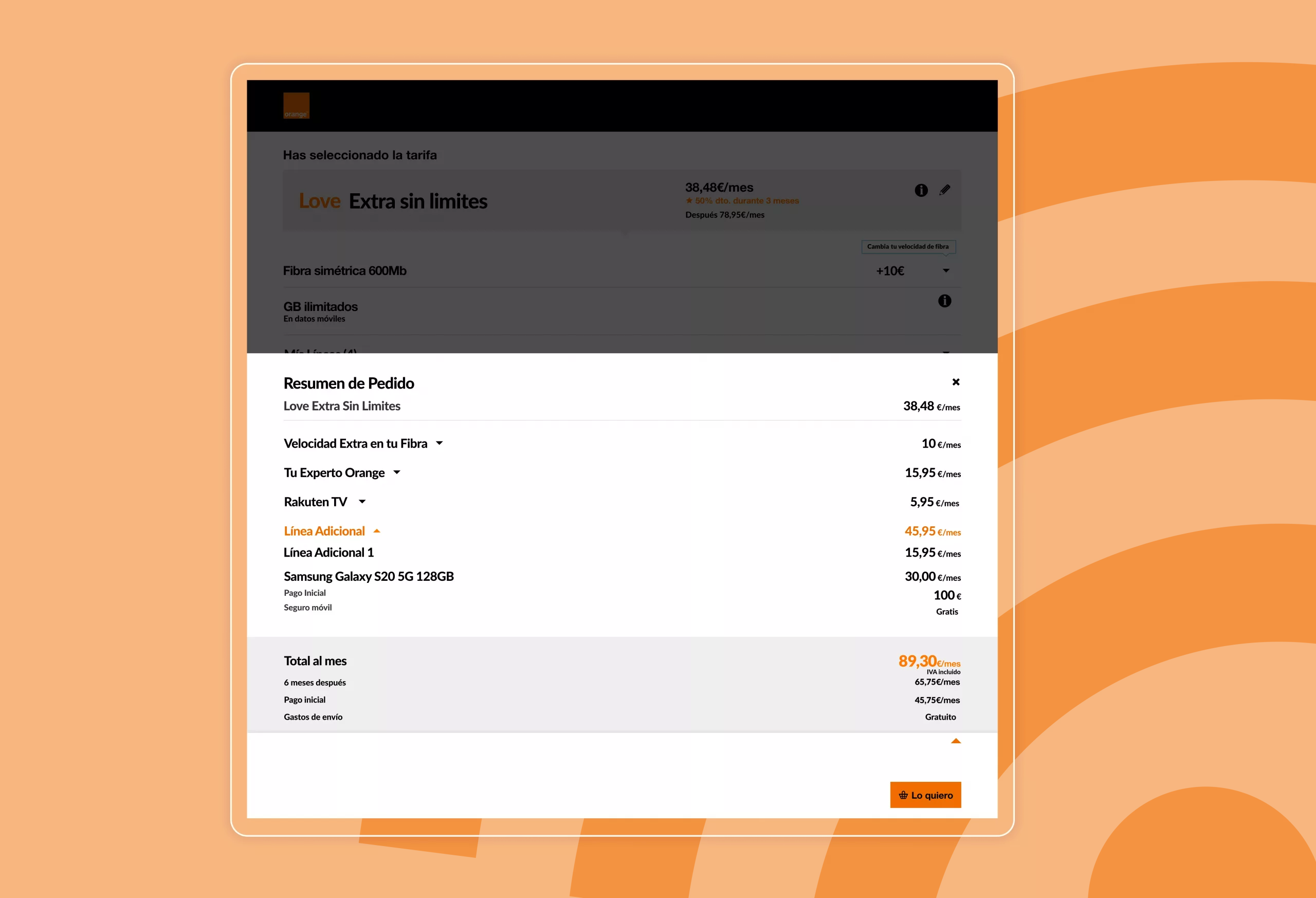
• Redesigned order summary
• Clearly defined error states (geographical or technical limitations)
• New modules for Fiber, TV, additional lines, second home internet
• Improved selectors, toggles, and inputs

🛒 The main challenge — Unifying two different carts

Orange had two completely different shopping carts

1. The public website cart

2. The logged-in user area cart

Each one had unique rules and legacy components. My task was to create a consistent, seamless experience despite these technical differences.

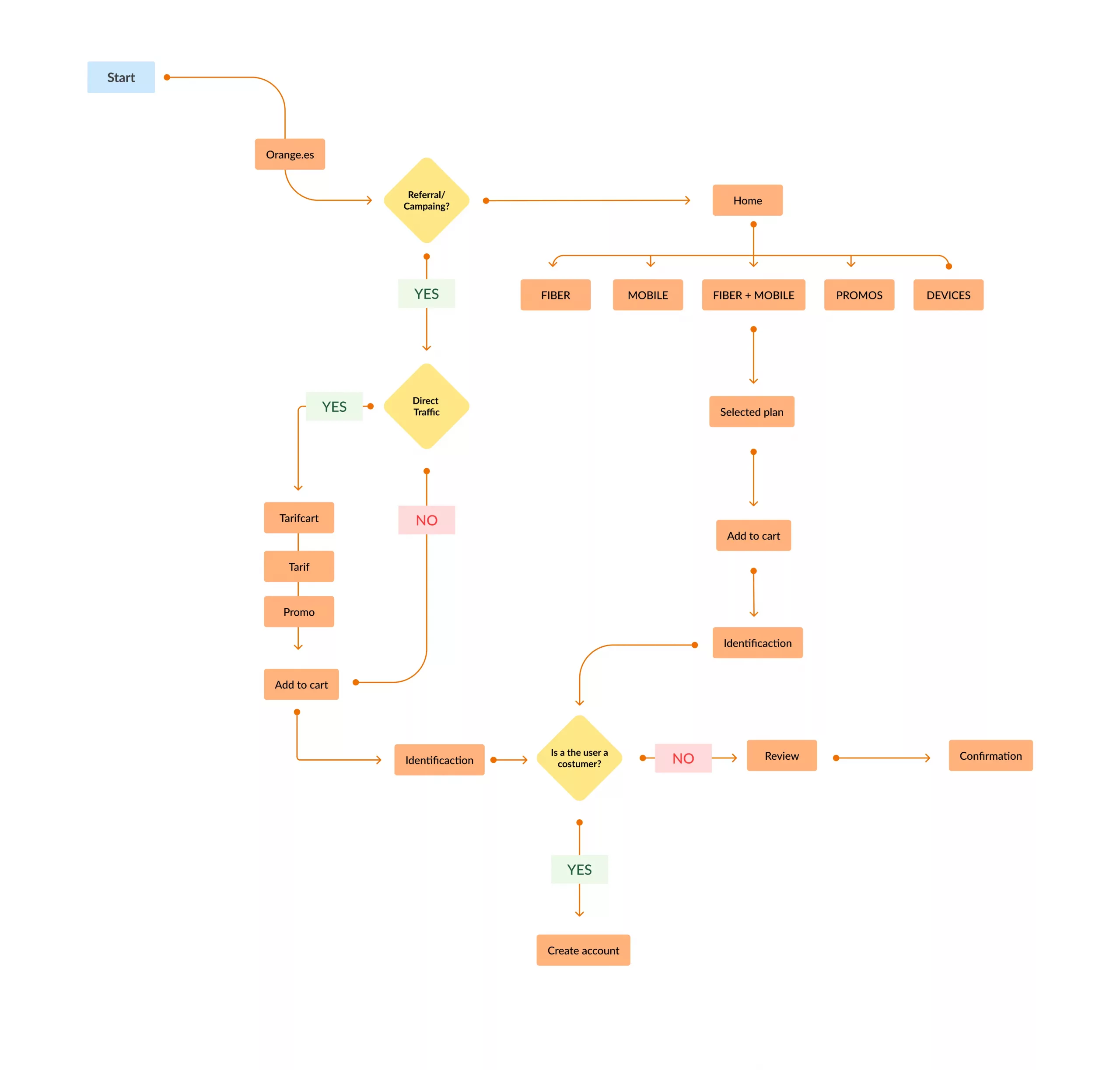
 🗺️ Flow redesign

Contracting cards
• Revised upgrade flows
• Redesigned order summary
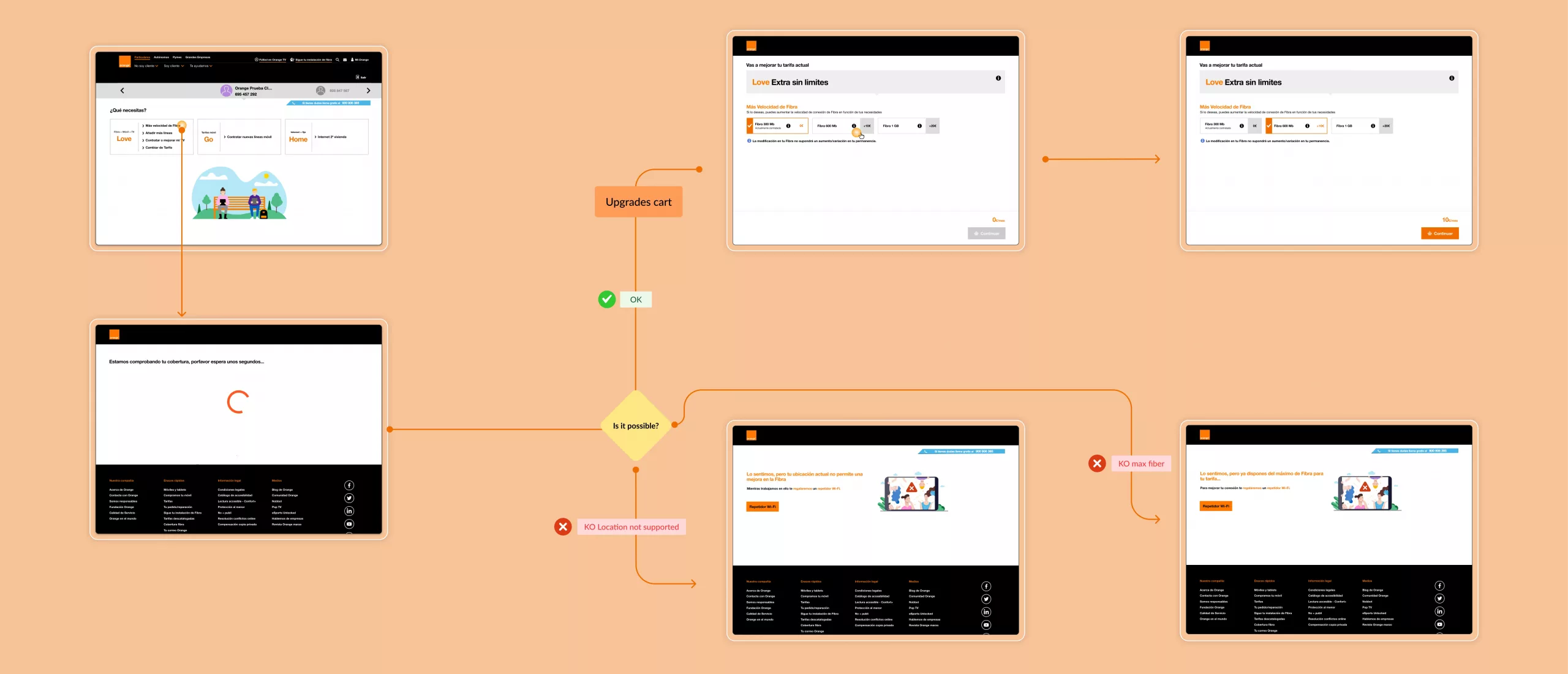
• Clearly defined error states (geographical or technical limitations)
• New modules for Fiber, TV, additional lines, second home internet
• Improved selectors, toggles, and inputs

Creation of new components for Orange

Validate
Testing, learning and iterating

 🧭 Usability test rounds

We conducted multiple rounds of user testing to validate whether the redesigned flows effectively solved the issues identified during discovery. These sessions allowed us to observe real user behavior, understand how they interpreted the new visual hierarchy, and detect moments of hesitation or confusion. We focused on:

Navigation patterns: ensuring the step-by-step structure felt intuitive, predictable, and easy to follow.
Order summary comprehension: checking whether users understood pricing, discounts, and installments at a glance.
Upgrade logic clarity: validating that contractual restrictions and upgrade rules felt transparent and fair.
Error-state communication: testing real scenarios such as coverage issues, incompatibilities, and blocked conditions.
General friction: identifying micro-frictions that, although subtle, affected the fluidity of the checkout experience.

 🗣️ Insights turned into improvements

From the tests, we extracted clear patterns: users needed more contextual cues during upgrades, stronger visual anchors within the checkout steps, and more empathetic messaging when errors occurred. 

These insights led to multiple iterations, including refined microcopy, clearer structural cues, and increased modularity across key components to improve comprehension and reduce cognitive load.

🔁 Iteration with development


From the tests, we extracted clear patterns: users needed more contextual cues during upgrades, stronger visual anchors within the checkout steps, and more empathetic messaging when errors occurred. 

These insights led to multiple iterations, including refined microcopy, clearer structural cues, and increased modularity across key components to improve comprehension and reduce cognitive load.

Old designs

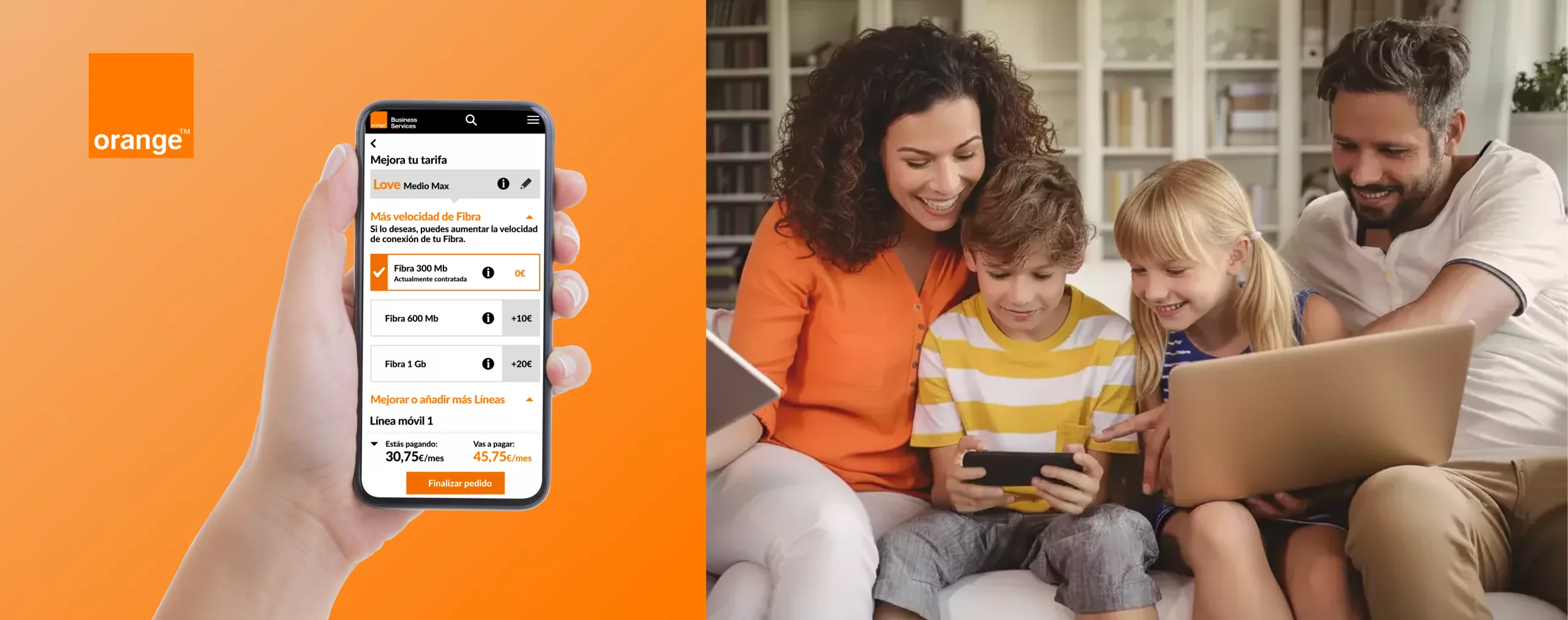
New designs for Desktop and Mobile

I worked on the definition and design of a new order summary, so that the user could have in a clearer and more orderly way all the changes, modifications or upgrades that had been made in his order.


I also worked on the definition and creation of a new flow, for users who had old tariffs and wanted to improve some aspect of it, (Fiber, Lines, TV, Internet second home, etc.).

In this part we also took into account the casuistry of the cases where it was not possible to implement such improvement, due to geographical problems or because the user already had the maximum of such improvement.


Results
A measurable impact

📊 Key outcomes 

✔ +38% increase in direct traffic
✔ +26.12% more viewed screens
✔ –30.97% reduction in bounce rate


🏁 Final reflections 

This was one of the most challenging projects due to the number of stakeholders, legacy systems, and the need to adapt two different carts simultaneously. Breaking the project into MVPs allowed us to release improvements progressively while maintaining consistency across devices. In the end, we achieved a more intuitive, coherent, and user-centered experience that significantly improved performance and customer satisfaction.


View Previous Project


View Next Project